Key takeaways
- Briefly splashed drywall can often be dried in place. Drywall that has soaked, swollen or been wet for days usually cannot.
- The paper facing is what fails. Once it separates from the gypsum core, the board is structurally done.
- Painting or texturing over wet drywall seals moisture in and guarantees a second repair.
It is one of the most common questions after a leak, and the answer genuinely depends on how wet, for how long, and what kind of drywall it is. Here is how to tell which situation you are in.
How drywall fails when it gets wet
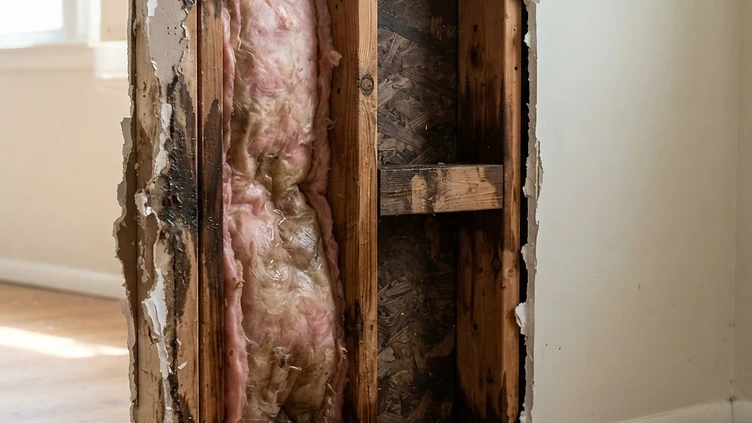
Drywall is a gypsum core wrapped in paper. The paper is the part that fails first. Once it absorbs water it swells, separates from the core and loses its strength — and that damage does not reverse when the board dries. The gypsum core itself will crumble if it stays saturated long enough.
- Paper facing separated, bubbling or peeling — replace
- Board swollen or crumbly at the edge — replace
- Soft or sagging ceiling board — replace
- Visible dark staining on the paper — replace
- Musty odour from the wall — replace, and check the cavity
- Surface damp only, from a brief splash or a small spill — often dryable in place
When it can be dried in place
- The board was wet for hours, not days
- It is clean water — a supply line, not a drain or an exterior flood
- The paper facing is intact and the board is not swollen
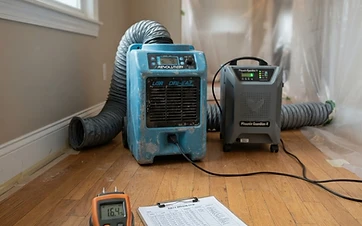
- Air movement and dehumidification can reach the affected area
- Moisture readings come down to normal and stay there
The rule we work to
If the paper has separated, the board is swollen, or it has been wet long enough to smell, it comes out. Drywall is inexpensive relative to what it costs to open the same wall twice — and the second time you are usually also treating mould.
Why painting over it never works
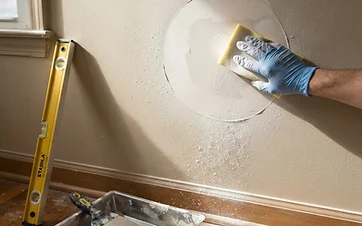
Paint and texture are not waterproof. Painting over damp drywall traps moisture against the paper, which keeps feeding the problem behind an intact-looking finish. It looks fine for a few months and then the stain comes back, the paint bubbles, or the smell returns — and by then the affected area is larger than it was.
What the EPA says
The EPA advises fixing the water or moisture problem first and drying water-damaged areas and items within 24 to 48 hours to prevent mould growth. It also notes that porous materials that have been wet and cannot be dried thoroughly may need to be removed and replaced.
Source: U.S. EPA — A Brief Guide to Mold, Moisture, and Your Home
What replacement actually involves
- 1
Find and fix the water source
Replacing board under an active leak just means doing it again.
- 2
Cut back to sound material
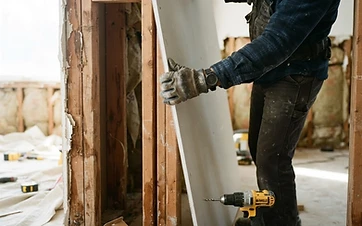
We remove the damaged board to the framing, not feather it into wet paper.
- 3
Dry and verify the cavity
Framing and insulation are dried and metered before anything is closed up.
- 4
Install and finish
New board, taped and finished to a level-4 standard in three coats.
- 5
Match and paint
Texture matched to the surrounding wall, primed, then blended into the existing paint.
One thing worth checking before you decide
Wet drywall is usually a symptom, not the whole problem. If the water came from above, the ceiling assembly and insulation may be affected too. If it came from a fixture, the subfloor and the baseboard below it usually are. We meter the whole area before quoting, because replacing one panel and leaving the wet material beside it is how a repair becomes a repeat call.
What we typically see in Las Vegas homes
Based on our own repair work
What we find when we open these walls in Las Vegas homes:
- The board is rarely the only thing wet. On the jobs we open, the insulation behind it and the baseboard below it are wet more often than not.
- Drywall in ceilings almost always needs replacing. Sagging board does not recover, and ceiling repairs are the hardest to make invisible afterwards.
- Greenboard and moisture-resistant board still fail when wet. It is more resistant to humidity, not to a leak, and we see it mistaken for waterproofing regularly.
- Homes with an AC air handler in the attic produce the most ceiling drywall replacements we see, because a condensate problem wets a large area before anyone notices.
A Las Vegas homeowner had a refrigerator supply line fail overnight, leaving the bottom two feet of drywall in a hallway visibly damp with the paint already bubbling.
Metered the wall and found the moisture had wicked roughly eighteen inches higher than the visible bubbling. Cut the affected board back to sound material and removed the swollen baseboard, dried and verified the cavity, replaced the board, taped and finished to level-4, matched the existing orange-peel texture, primed, then blended the paint to the nearest corner and installed new baseboard, caulked and painted.
Las Vegas, NV