Key takeaways
- Rehab typically runs 20–35% of the purchase price on a typical Las Vegas flip — higher on long-deferred stock.
- The costs that kill flips are the ones not in the rehab budget: holding costs, closing costs and selling costs.
- Every week of delay costs you twice — in holding costs and in a slower sale.
Flipping profit is made at the purchase, protected in the rehab budget, and lost in the timeline. Here is how to build a rehab budget for a Las Vegas property that survives contact with the house.
Start with the ARV math
Most flippers underwrite with some version of the 70% rule: the maximum you should pay is roughly 70% of the after-repair value, minus the cost of repairs. The 30% that is left has to cover holding costs, closing costs, selling costs, your financing and your profit.
Typical rehab line items
| Scope | Typical Las Vegas range | Notes |
|---|---|---|
| Cosmetic flip, 3BR / 2BA | $35,000 – $60,000 | Paint, flooring, kitchen and bath refresh, no layout changes |
| Full rehab, 3BR / 2BA | $60,000 – $95,000 | Kitchen and bath gut, flooring throughout, systems work |
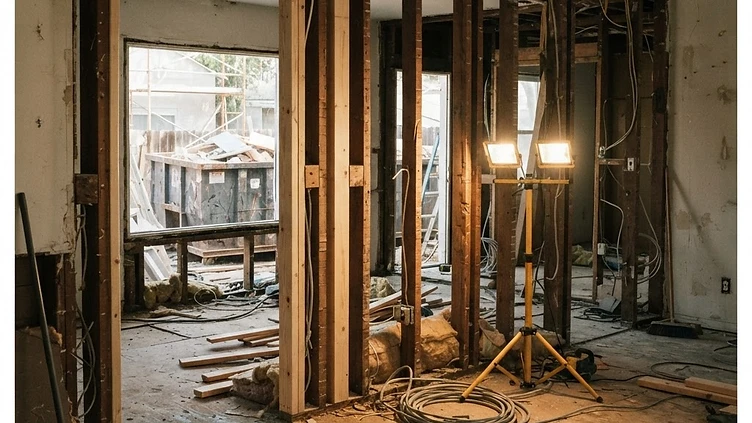
| Heavy rehab with layout changes | $95,000 – $160,000+ | Wall removal, moved plumbing, permits, structural |
| Interior paint, walls and ceilings | $1,800 – $3,200 | Per 3BR home, two coats |
| LVP flooring installed | $3.50 – $6.00 / sq ft | The standard flip floor |
| Tile installed | $7.00 – $14.00 / sq ft | Baths, laundry, entry |
| Kitchen — cabinets, counters, backsplash | $12,000 – $28,000 | Mid-range, stock or semi-custom |
| Bathroom — full remodel | $9,000 – $22,000 | Per bathroom |
| Drywall repair and texture match | $600 – $3,500 | Whole-house patching |
| Interior doors and trim | $250 – $500 per door | Including hardware |
| Water heater replacement | $1,200 – $2,800 | Often needed on older stock |
| HVAC service or replacement | $600 – $8,000 | Depends on age and condition |
The costs flippers forget to count
- Holding costs — taxes, insurance, utilities, HOA and loan interest, every month the house sits.
- Closing costs on the purchase, typically 2–3% of the purchase price.
- Selling costs — agent commissions and seller-side closing costs, often 6–9% of the sale price.
- Permit fees, where the scope requires them.
- A contingency. Ten percent of the rehab budget is the floor, not the ceiling.
- The months of your own time, and the cost of any month the house sits empty.
A worked example
A $300,000 purchase with a $60,000 rehab is not a $360,000 project. Add roughly $7,500 in purchase closing costs, $6,000 in holding costs over four months, and $18,000 in selling costs on a $430,000 sale, and the all-in number is closer to $391,500. That is the number to underwrite against.
The three overruns that kill a flip
- 1
Moisture you did not find at the walkthrough
A past leak means drywall, insulation, sometimes flooring and framing. It also means a mould question. Test for it before you close, not after.
- 2
Systems you assumed were fine
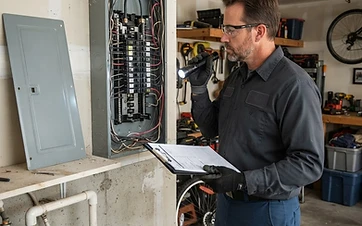
HVAC, water heater, electrical panel, sewer line. On older Las Vegas stock these are frequently at end of life. Inspect them during due diligence and price them in.
- 3
Timeline slip
Every extra week costs holding costs plus a slower sale. One contractor, one schedule, one point of contact is what protects the timeline.
Where to spend and where to save
| Spend here | Save here |
|---|---|
| Kitchen — it sells the house | Cabinet refinishing instead of replacement where the boxes are sound |
| Flooring — LVP throughout, tile in wet areas | Skip hardwood and high-end carpet |
| Paint — neutral, two coats, professional | Skip accent walls and trendy colours |
| Primary bathroom — at least a refresh | Skip luxury finishes in secondary baths |
| Curb appeal — exterior paint, clean landscaping | Skip full landscape redesigns |
| Lighting and hardware | Skip designer fixtures |
| Fix everything broken | Skip anything that is a matter of taste |
Timeline for a Las Vegas flip
| Phase | Typical duration |
|---|---|
| Due diligence and scope | 1–2 weeks |
| Permits, where required | 2–4 weeks |
| Cosmetic flip rehab | 3–5 weeks |
| Full rehab | 6–10 weeks |
| Heavy rehab with layout changes | 10–16 weeks |
| Listing and sale | 3–8 weeks |
Get the scope before you make the offer
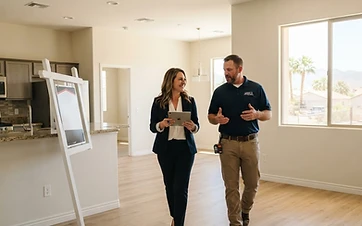
The best money you will spend on a flip is a walkthrough and a written line-item scope before you close. It converts your rehab guess into a number you can underwrite, and it tells you which problems are cosmetic and which are expensive. Ours is free.
What we typically see in Las Vegas homes
Based on our own repair work
From the rehabs we scope and run for Las Vegas investors:
- The moisture question is the one that changes a deal. On older Valley stock we find evidence of a past leak on a meaningful share of properties, and it is the most common reason a rehab budget has to be rewritten.
- Systems are the second overrun. Water heaters and HVAC units on 1990s homes are frequently at end of life, and buyers' inspectors will find them whether you address them or not.
- Timeline is where the profit goes. Holding costs on a Las Vegas flip are real money every month, and slipping from spring into the summer heat is a genuine price hit.
- The flips that do best are the ones that fix everything broken and change nothing that is a matter of taste. Over-personalised finishes sit on the market.
An investor was underwriting a 1990s Las Vegas property and had budgeted $55,000 for a cosmetic flip based on a drive-by assessment and the listing photos.
Walked the property during due diligence and produced a written line-item scope. It identified an AC condensate line that had been staining a ceiling, a water heater at end of life, a bathroom with no waterproofing behind the tile, and a subfloor that would need correcting under new flooring. The revised scope came in at $78,000, and the investor renegotiated the purchase price on the basis of the documented findings rather than walking away.
Las Vegas, NV