Key takeaways
- The first hour is about stopping water. Everything after that is about drying, documenting and rebuilding.
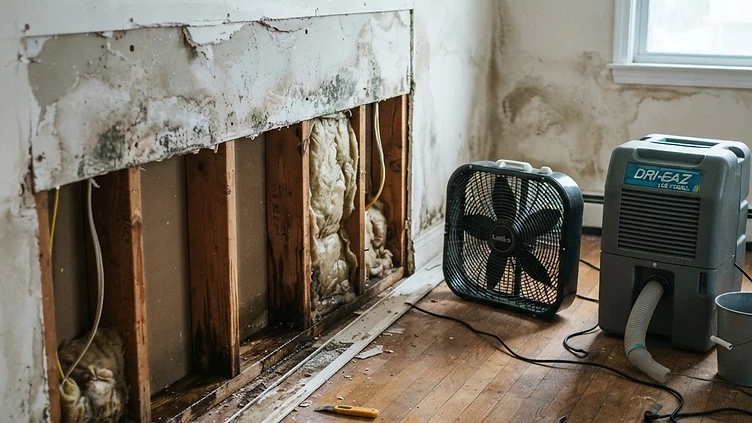
- Water that reached the wall cavity will not dry on its own — it has to be opened up.
- Photograph everything before anything is moved or removed.
A water loss in a rental is a clock, not an event. What happens in the first day decides whether you are looking at a flooring repair or a mould remediation — and that difference is usually thousands of dollars.
The first hour
- Shut off the water at the fixture, then at the main if the source is not obvious.
- Cut power to any affected area at the breaker if water is anywhere near outlets, fixtures or the panel.
- Get the tenant and their belongings out of the wet area.
- Photograph and video everything — before you move anything. Wide shots of each room, then close-ups.
- Note the time you discovered it. Adjusters ask.
Hours 1–24: dry, document, and assess
- Remove standing water and any soaked rugs, bedding or furniture.
- Pull up wet carpet or lift flooring edges so air can reach the subfloor.
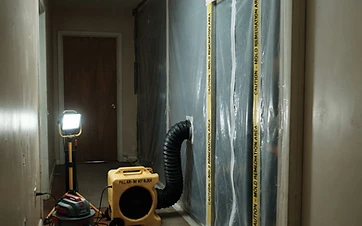
- Run fans and a dehumidifier if you have them — they buy time, they do not replace drying equipment.
- Check the rooms below and adjacent. Water travels along joists and through wall cavities far further than it looks.
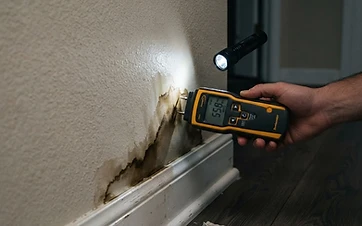
- Look for the signs it went into the walls: soft baseboards, bubbling paint, a musty smell, or a stain line creeping up the drywall.
- Call your contractor and your carrier the same day. Most policies and most warranties have notification windows.
What the EPA says
The EPA advises fixing the water or moisture problem and drying water-damaged areas and items within 24 to 48 hours to prevent mould growth. That window is the reason everything on this list happens on day one.
Source: U.S. EPA — A Brief Guide to Mold, Moisture, and Your Home
Three moves that turn a repair into a mould job
- Leaving the AC off. In a Las Vegas summer, a warm, wet, closed-up unit is an incubator.
- Painting or patching before the assembly is verified dry. Moisture meters, not fingers, decide this.
- Assuming the wall dried because the surface feels dry. Drywall paper dries long before the insulation and framing behind it do.
Why the rebuild matters as much as the dryout
Most water losses end with material that has to come out: baseboard, a section of drywall, sometimes flooring and cabinets. Many restoration companies stop at the dryout and leave you to find a contractor for the put-back — which is where weeks disappear and the unit sits empty.
We handle the water-damage repairs and the reconstruction under one company: the removal, the rebuild, the new drywall and texture, the paint, the trim, the flooring and the final punch. One schedule, one invoice, and a unit that is genuinely finished rather than almost finished.
Signs the damage is worse than it looks
| What you see | What it usually means |
|---|---|
| Soft or swollen baseboard | The bottom plate and drywall are wet — open it up |
| Bubbling or peeling paint low on a wall | Moisture is behind the finish, moving upward |
| Musty smell that returns after cleaning | Growth has started in a cavity or the subfloor |
| Soft spot in the floor near a fixture | The subfloor is saturated and may need replacement |
| A stain line climbing the wall | Water is still wicking through the drywall paper |
If the unit is occupied
Keep the tenant informed in writing, move their belongings out of the wet zone yourself, and put any affected systems — power, water, heat — in writing too. Clear documentation is what keeps a repair from becoming a dispute.
What we typically see in Las Vegas homes
Based on our own repair work
From the water losses we are called to across the Valley:
- The units that come out cheapest are the ones where we were called the same day. The affected area is simply smaller by the time we open the wall.
- Carpet pad is the worst offender. It holds water against the subfloor and does not dry, so it always comes out — carpet can sometimes be saved, the pad almost never.
- Most of the losses we see were discovered late, usually because the unit was vacant or the tenant was away. A vacant unit with a leak is the worst-case version of this.
- Landlords who photograph everything before moving anything have a far easier time with the claim. That five minutes of photos is worth real money.
A refrigerator supply line failed overnight in a Centennial Hills rental and had been running for two days before the manager was told. Water had travelled under the kitchen flooring into the hallway, and the bottom of the adjoining drywall was saturated well above the visible stain line.
Mapped the moisture to find where the water had actually travelled, removed the affected flooring and the swollen bottom course of drywall, dried and verified the subfloor and cavity, corrected and levelled the subfloor at the seams, installed new luxury vinyl plank with a vapour barrier and clean transitions, replaced the drywall, matched the texture, primed and painted, then replaced and painted the baseboard. Eight working days, back on the market.
Centennial Hills, Las Vegas, NV